
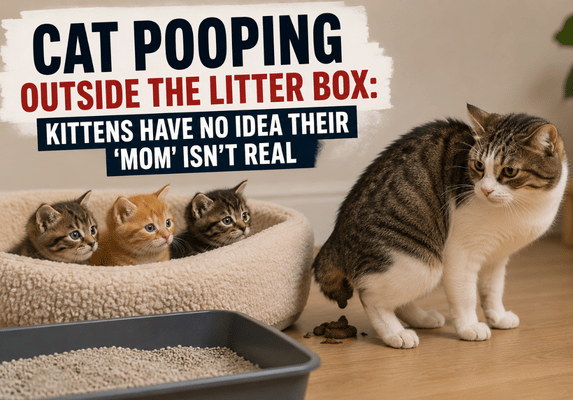
Bringing a rescue pet home is a journey full of love and unexpected moments. However, it often comes with a few training hurdles. When a devoted owner prepared his home, he was eager to welcome newborn kittens. Tragically, the birth mother passed away shortly after giving birth. Left with helpless babies, the owner faced a heart-wrenching emergency. He quickly adopted a rescue foster cat to act as a surrogate mother. But the new cat felt overwhelmed by her sudden relocation. As a result, she showed immediate signs of anxiety by being a cat pooping outside the litter box instead of using her tray.
Motherly Instincts Overcome Stress
Despite her initial bathroom accident, motherly instincts quickly took over her stress. The owner was initially worried upon seeing her cat pooping outside the litter box in the corner of the room, which is a classic response to environment-induced stress in felines. But the moment the surrogate cat heard the weak meows of the orphaned kittens, everything changed. She walked straight into their bed, wrapped her body around them, and began grooming them gently. The tiny, helpless babies had absolutely no idea that this new cat wasn’t their biological mother; all they knew was that warmth, milk, and safety had returned to their lives.
An Unbreakable Family Bond
As the days passed, the connection between the surrogate mother and the kittens grew remarkably deep. Even as the owner worked through the temporary issue of the cat pooping outside the litter box by creating a peaceful setup, the mother cat devoted every second to her new family. She nursed them, kept them cozy, groomed them tirelessly, and guarded them with fierce affection. Surprisingly, the kittens formed an even stronger bond with her than usual, clinging to her fur and purring whenever she was near. According to pet storytelling insights on Moatales, newborn kittens do not rely on visual recognition; they respond entirely to warmth, scent, and nurturing care, making surrogate acceptance completely seamless.
A Happy Ending for a Makeshift Family
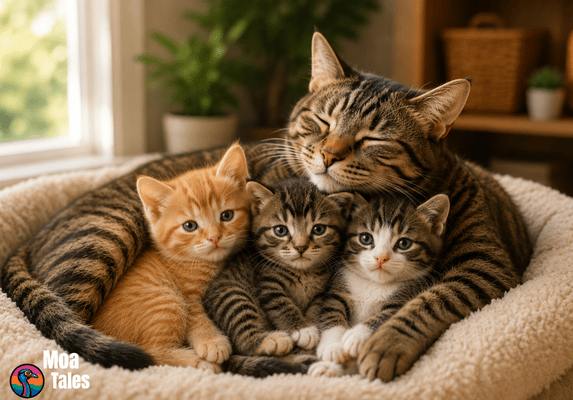
Watching this sweet family thrive brought immense relief and happiness to the owner. With a little patience, extra love, and proper litter box adjustments, the surrogate mother fully settled in, completely overcoming her habit of being a cat pooping outside the litter box. She continues to nourish, protect, and raise her adopted babies as if they were her own flesh and blood. Heartwarming rescue stories like this, frequently featured on Moatales, show us that true motherly love isn’t defined by biology it is defined by care and devotion.
Conclusion
Losing a mother cat right after birth is devastating, but introducing a loving surrogate cat can save fragile newborn lives. Even when a newly adopted rescue cat experiences temporary behavioral challenges like a cat pooping outside the litter box due to moving stress her natural instinct to protect and feed babies can build an unbreakable bond. True love knows no biological boundaries.
FAQs
Do newborn kittens know if a surrogate cat isn’t their real mother?
No, newborn kittens rely entirely on warmth, scent, and milk, so they accept a caring surrogate mother as their true mom without hesitation.
Why was the new surrogate cat pooping outside the litter box?
Moving into a new environment causes stress and anxiety in cats, which often results in temporary litter box accidents.
Can a surrogate cat feed kittens if she isn’t their biological mother?
Yes, if the surrogate cat recently had kittens or is in a maternal state, she can nurse them; otherwise, bottle feeding alongside her care may be needed.
How can I stop a stressed rescue cat from pooping outside the litter box?
Place the box in a quiet spot, keep it clean, use calming pheromone diffusers, and give the cat time to feel safe in her new home.
Is it safe to introduce newborn orphans to an adopted surrogate cat?
Yes, but you should always monitor their first interaction closely to ensure the adult cat acts gently and protectively toward the babies.