
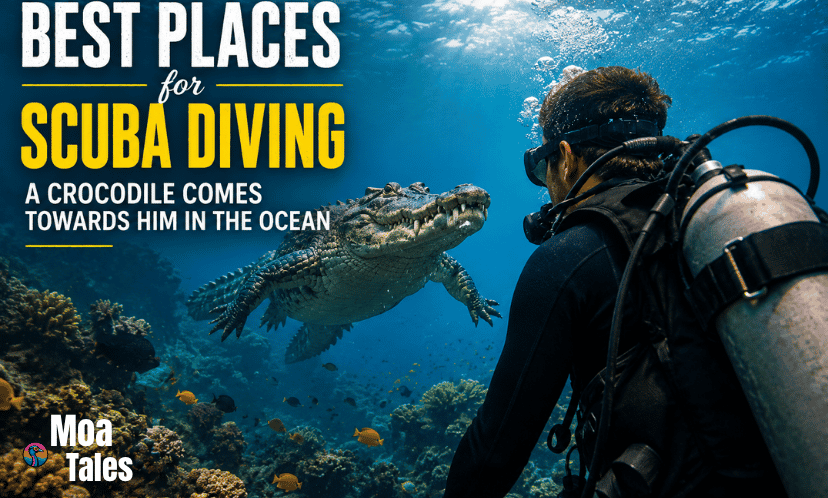
Scuba diving is usually associated with colorful coral reefs, tropical fish, clear blue water, and peaceful underwater exploration. But sometimes, an ordinary dive can suddenly become an unforgettable wildlife encounter. In one remarkable moment, a diver found himself facing a crocodile in the water, turning a relaxing underwater adventure into a tense encounter with one of nature’s most powerful predators. For people searching for the best places to scuba dive, stories like this are also a reminder that underwater adventures can bring unexpected surprises. At MoaTales, we explore the fascinating moments when humans and animals cross paths.
What Is Diving and How Does It Work?
Diving is the practice of exploring underwater with the help of specialized equipment, such as a mask, fins, and a breathing system. Scuba diving allows people to stay beneath the surface longer while observing marine life and underwater landscapes. Before entering the water, divers learn how to use their equipment, control their breathing, and respond to changing conditions. Being prepared is especially important because the underwater world can be unpredictable, with unexpected encounters like the crocodile in this story showing why awareness and caution matter during every dive.
A Peaceful Dive Takes an Unexpected Turn
The diver entered the water expecting to explore the underwater surroundings like any other scuba adventure. With his diving equipment in place, he moved through the water while keeping an eye on the environment around him.
Everything appeared normal until something much larger caught his attention.
A crocodile was moving through the water.
At first, the diver noticed the animal from a distance. The crocodile continued swimming through the water, seemingly focused on its own surroundings. Then, as the animal changed direction, the diver realized that it was coming closer to his position.
That was the moment when the peaceful dive suddenly became much more serious.
Instead of being surrounded only by small fish and underwater scenery, the diver now had a large predator somewhere in front of him. The crocodile’s powerful body moved through the water with surprising ease, making the encounter both fascinating and frightening.
The Moment the Crocodile Gets His Attention
Seeing a crocodile in the water from a distance would already be enough to make most people nervous. Seeing one begin moving in your direction is an entirely different experience.
The diver appeared to notice the crocodile and keep track of its movement rather than immediately turning the situation into a frantic chase. Underwater, a diver has to think differently because swimming quickly can use more air and make it harder to maintain control.
The crocodile continued moving closer, and the diver had to remain aware of the animal’s position.
This is what makes the scene so gripping. There is no need for dramatic music or exaggerated action. The simple fact that a diver and a large crocodile are sharing the same stretch of water is enough to create tension.
The diver’s equipment also played an important role. His mask allowed him to see underwater, while his breathing equipment helped him remain submerged and monitor the animal from a distance.
Did the Diver Run Away?
When people watch a scene like this, one of the first questions they naturally ask is: What did the diver do when the crocodile came toward him?
A normal reaction would be to panic and swim away as quickly as possible. But underwater, that may not always be the smartest response.
A diver needs to stay calm, maintain control of their breathing, and pay attention to their surroundings. Sudden movements can make an already stressful wildlife encounter harder to manage.
Rather than trying to chase the crocodile away or get closer for a better look, maintaining distance is the safer approach. The goal during a wildlife encounter should always be to create space between the person and the animal.
The diver’s awareness of the crocodile’s movement was therefore extremely important. He could see where the animal was and adjust his position accordingly instead of blindly swimming in panic.
Why Would a Crocodile Enter the Water?
Crocodiles are excellent swimmers and can spend significant amounts of time in water. Depending on the species and location, they may be found in rivers, lakes, wetlands, estuaries, and coastal environments.
A crocodile moving through the water does not necessarily mean it is looking for a human. The animal may simply be traveling, searching for food, or moving through its natural habitat.
This is an important point for divers. Wildlife encounters should not automatically be interpreted as an attack.
However, crocodiles are powerful predators, and their behavior should always be treated with caution. Divers should never attempt to touch, feed, chase, or deliberately approach one.
The Scariest Part Was the Uncertainty
Perhaps the most intense part of an encounter like this is not knowing what the crocodile will do next.
The animal could change direction at any moment. It could continue swimming away, move closer, or disappear into deeper water. For the diver, every movement matters.
That uncertainty is what makes underwater wildlife encounters so different from seeing an animal behind a fence. There is no glass separating the diver from the crocodile.
The diver has to rely on awareness, training, equipment, and judgment.
For viewers, the scene can be fascinating to watch. For the person actually underwater, however, the situation requires much more concentration.
What Divers Should Learn From a Crocodile Encounter
An encounter with a crocodile is a strong reminder that scuba diving takes place in a living ecosystem. Divers are visitors in an environment shared by countless animals.
Before entering the water, divers should learn about the local wildlife and listen carefully to their dive guides. They should understand possible hazards, follow local rules, and avoid areas where dangerous animals are known to be active.
If a large animal appears unexpectedly, keeping a safe distance is essential. Divers should avoid provoking the animal and should follow the instructions of trained guides whenever possible.
The best underwater experience is not necessarily the one that produces the closest photograph. Sometimes the most valuable experience is observing wildlife without disturbing it.
Finding the Best Places to Scuba Dive
The best places to scuba dive are not simply destinations with beautiful photographs. Great diving locations can offer coral reefs, clear visibility, interesting underwater landscapes, fascinating marine animals, and experienced local dive operators.
Destinations around the world are known for different types of diving. Some are famous for colorful reefs, while others attract divers because of wrecks, caves, sharks, rays, turtles, or unusual marine life.
But wherever someone chooses to dive, preparation matters. Understanding local conditions and respecting wildlife can make an adventure safer and more enjoyable.
The crocodile encounter is a perfect example. What began as a normal underwater exploration suddenly became a story the diver was unlikely to forget.
Conclusion
The best places to scuba dive can offer breathtaking underwater scenery, but the ocean and coastal environments can also produce unexpected wildlife encounters. When a crocodile came toward the diver, the situation instantly changed from a peaceful exploration into a tense moment of observation and caution. The encounter highlights why divers should remain calm, keep their distance from wild animals, and understand the environment before entering the water. As this unforgettable moment shows, sometimes the most surprising part of a dive is the creature you never expected to see.
FAQs
Can Crocodiles Swim in Ocean Water?
Some crocodile species can tolerate saltwater and frequently travel through coastal or marine environments.
What Should a Diver Do if a Crocodile Approaches?
Stay calm, maintain distance, avoid provoking the animal, and strictly follow the instructions of experienced guides.
Can Scuba Divers Breathe Underwater?
Yes. Scuba equipment provides divers with compressed air so they can breathe continuously while underwater.
Are Crocodiles Dangerous to Divers?
Crocodiles are powerful apex predators and should always be treated with extreme caution. Divers should never intentionally approach or harass them.
What Makes a Good Scuba Diving Destination?
Clear visibility, suitable water conditions, diverse marine life, interesting underwater sites, and reputable dive operators all contribute to a great diving experience.